

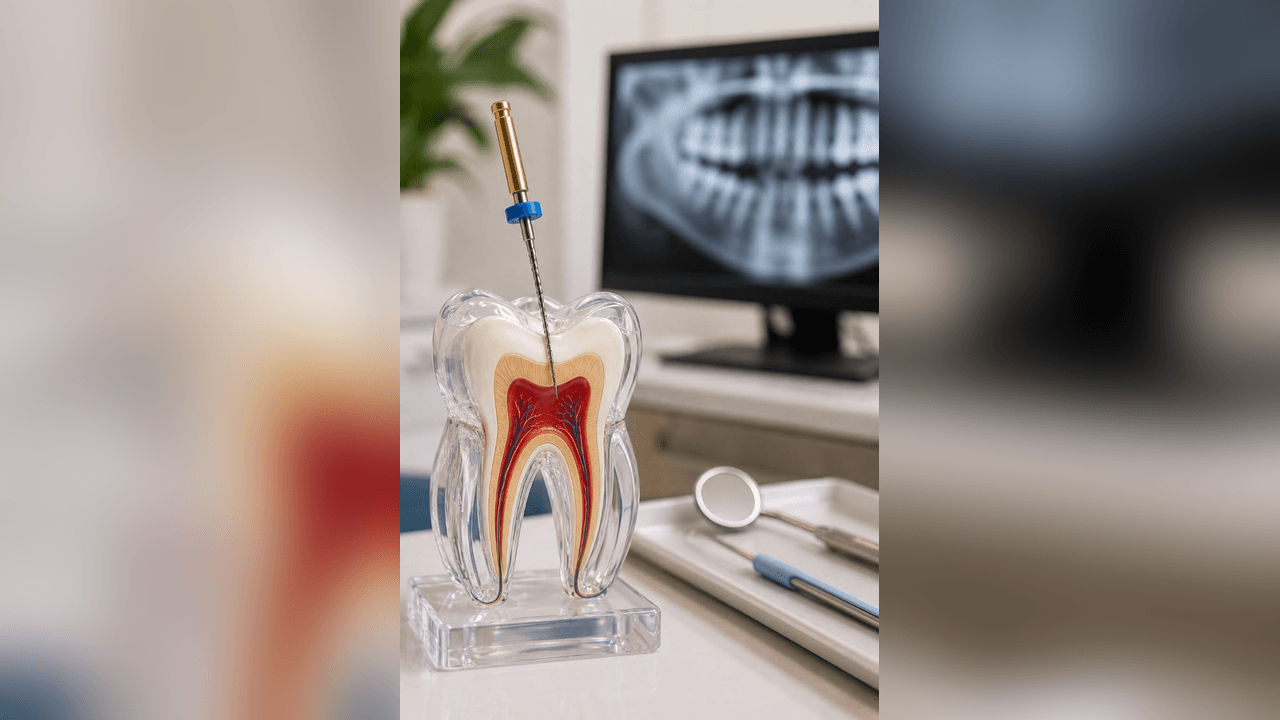
Key Clinical Takeaways
- Your natural tooth has periodontal ligament fibers that sense bite pressure—something no artificial replacement can fully replicate.
- Modern root canal treatment relieves toothache rather than causing pain, thanks to profound local anesthesia and flexible rotary instruments.
- Placing a full-coverage Zirconia or ceramic crown promptly after root canal treatment protects the tooth from future vertical fracture.
Why Saving Your Natural Tooth Matters Biologically
When a deep cavity or fracture triggers acute toothache, many patients understandably ask whether it is simpler to just pull the tooth out. From an endodontic perspective, preserving your natural tooth root is almost always the healthiest long-term choice.
Every natural tooth is suspended in the jawbone by a microscopic shock-absorbing hammock called the periodontal ligament. This ligament contains specialized nerve receptors that regulate how hard your jaw muscles bite down. Extracting a tooth prematurely not only removes this biological sensor, but also allows neighboring teeth to tilt into the empty space and opposing teeth to supra-erupt.
Warning Signs That the Dental Pulp Is Infected
Beneath the hard white enamel and underlying dentin lies a soft tissue chamber containing blood vessels and nerves (the dental pulp). When bacteria breach this chamber, pressure builds inside the rigid tooth walls.
- Sharp or lingering pain lasting more than 30 seconds after drinking hot tea or cold water
- Spontaneous throbbing pain that wakes you up at night or worsens when lying flat
- Tenderness when chewing or tapping on a specific tooth
- A small recurring pimple-like swelling (sinus tract) on the gums near the root tip
How Modern Endodontics Differs from Old Perceptions
Decades ago, root canal procedures relied on rigid hand files and multiple lengthy appointments. Today, electronic apex locators measure root length to a fraction of a millimeter, digital radiographs provide instant visualization, and flexible nickel-titanium rotary instruments clean curved canals smoothly and quietly.
In many cases without active periapical swelling, the entire cleaning, ultrasonic disinfection, and three-dimensional obturation can be completed comfortably in a single sitting under local anesthesia.
The Role of the Post-Endodontic Crown
A tooth that requires a root canal has typically already lost significant structural strength to caries or old fillings. Once the root canal seal is complete, placing a custom Zirconia or all-ceramic crown distributes chewing loads evenly across the root and prevents cuspal splitting.
Interested in this procedure?
Review full clinical steps, indications, and appointment options.